


1. Focus on golf, not math
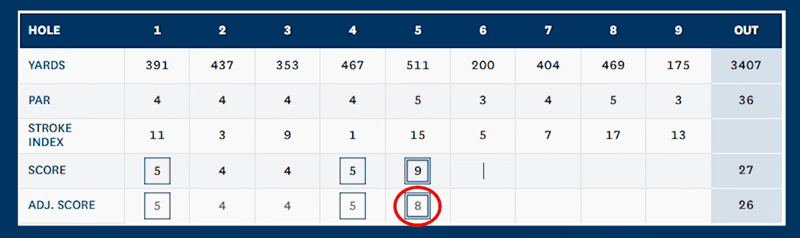
There may have been no saving Haotong Li from posting a 10 on the No. 13 hole at the Masters, but when it comes to posting a score for handicapping purposes, the maximum score you can post on any given hole is net double bogey. Of course, in order to do that you need to know what net-double-bogey is for you on each hole.
Thankfully, you don't need to worry about that out on the course when using the GHIN app. Just keep your score as you normally would during the round and the app will automatically calculate when a hole needs to be adjusted for net-double-bogey before posting your score.
2. Promote same-day posting
Posting your round the same day you play is critical for two reasons. Your Handicap Index updates after each score you post so this ensures your record stays as current and relevant as possible. Also, your score is factored in with the rest of the rounds played at that course that day to potentially generate a Playing Conditions Calculation (PCC). This computation determines whether a course played easier or more difficult on any given day based on things like the weather conditions and course set-up. If you don't post your round right away, it won't be factored into the PCC.
Using the GHIN app during the round promotes same-day posting because you’re doing it in real time.
3. Integrate your Handicap Index into the scorecard
If you've only ever posted your total score at the end of the round, you may think your Course Handicap is arbitrarily subtracted from your gross score to calculate your net score. In reality, where these strokes are applied is determined by the Stroke Index Allocation, which you might recognize as those numbers on the scorecard from 1-18 usually labeled "Men's/Women's Handicap."
These numbers represent a ranking of the difficulty of each hole as determined by the course/club, with 1 being the most difficult and 18 being the easiest. Your strokes are applied starting with the hole of a stroke index of 1 and continuing until you reach your Course Handicap. For example, if you have a Course Handicap of 14, you'd receive a stroke on holes indexed 1-14.
This is obviously necessary to have when playing in a format like match play or Stableford, where the score of each individual hole matters. But it's also crucial information during every round when determining your max score for a given hole, which we'll dive into next. When you keep score using the GHIN app, you'll know exactly where your strokes are being applied.
4. Real insights for your golf game
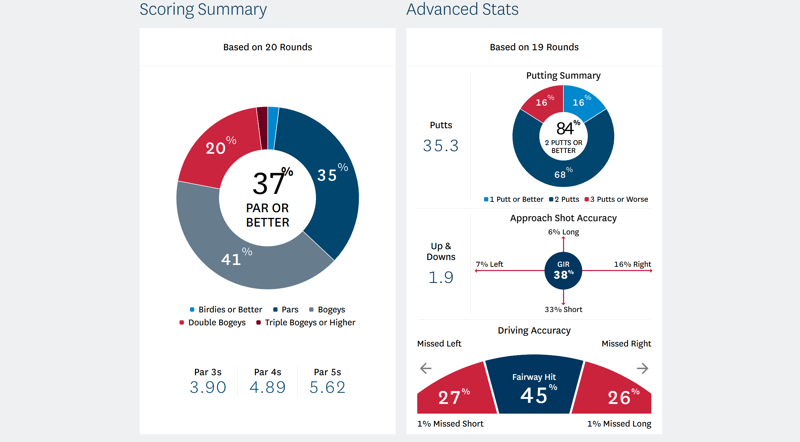
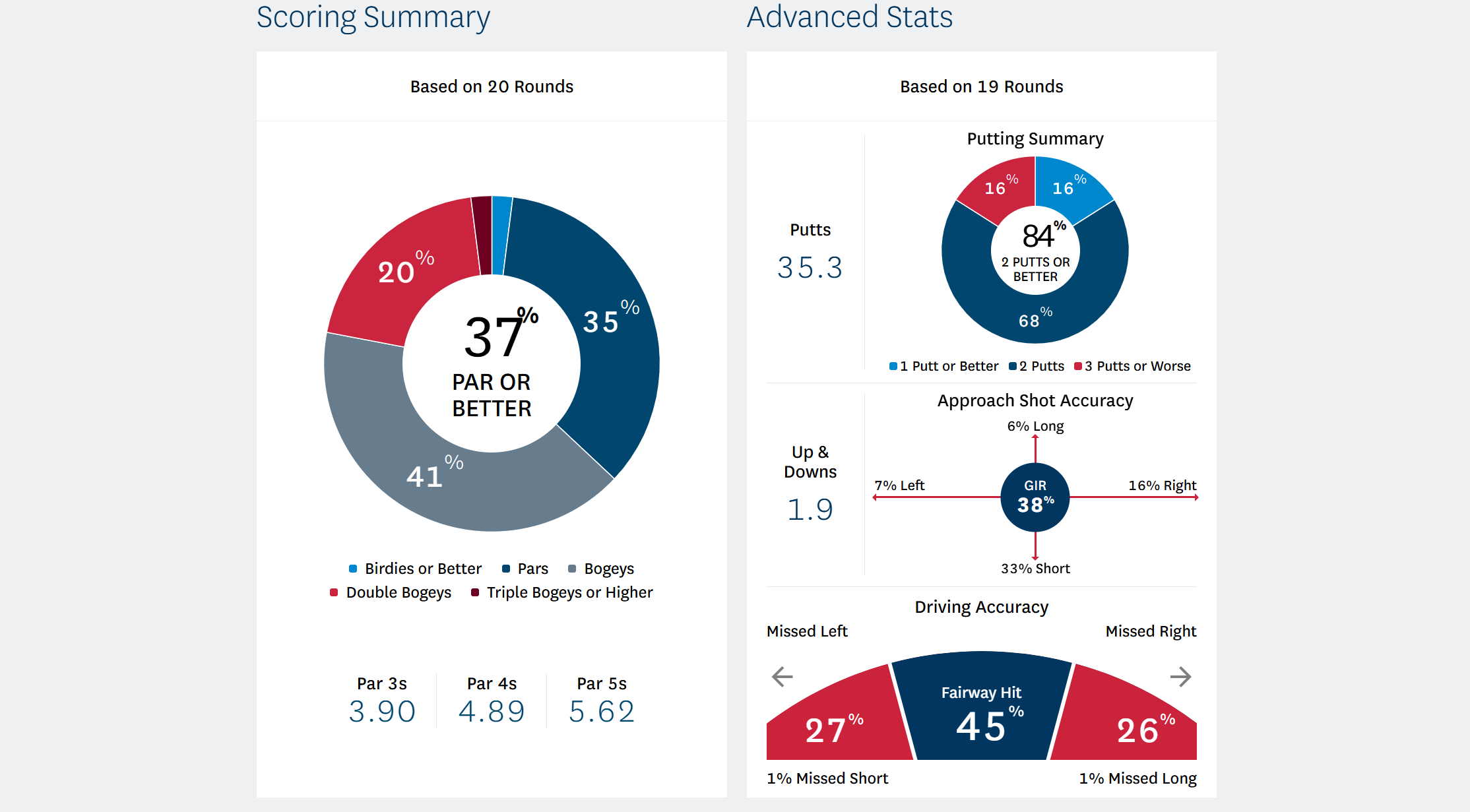
Every golfer knows there are a near-infinite number of paths you can take to putting a 90 on the scorecard at the end of the round. If you want to get your scores under that mark (or under 80 or 70), you'll need more information on what you need to improve to shoot lower scores.
When you keep your hole-by-hole score in the GHIN app, you can do much more than just jot down your score. You can keep track of whether you hit the fairway, reached the green in regulation and how many putts you took, and then review a summary of your round once it's over. Do this over the course of several rounds and you'll have a better picture of your trends. Are your misses generally to the right or the left? Do you need to hit more fairways or work on your short game? Do you struggle more with the pressure of a par 3 or the distance of a par 5? The only way to find out is to start keeping track.
5. Keep things fair
The World Handicap System (WHS) relies on more than just math. It hinges on the integrity and trust that each golfer is entering accurate scores. Entering scores hole-by-hole provides a transparent, verifiable record that supports the peer review process. It’s much harder to question the legitimacy of an abnormally low or high round when there is a clear, hole-by-hole story of how that score was built.
By providing this level of detail, you contribute to a fair playing field for everyone in your club. When every golfer uses the app to record their play in real-time, it ensures that handicaps are an honest reflection of potential, keeping tournament flights competitive and net games equitable.